
Julian Costley, CEO & publisher at Bite-Sized Books, interviews some of our authors to provide further background to their books and to their approach to writing. And a little ‘behind-the-scenes’ glimpse of their life and influences.
In this edition Julian talks to author and television producer Fiona Chesterton about her memoir, Not The Token Woman – My BBC Life 1975 – 1992 published by Bite-Sized Books, her career in television, and what happened when she booked an interview with the Sex Pistols.
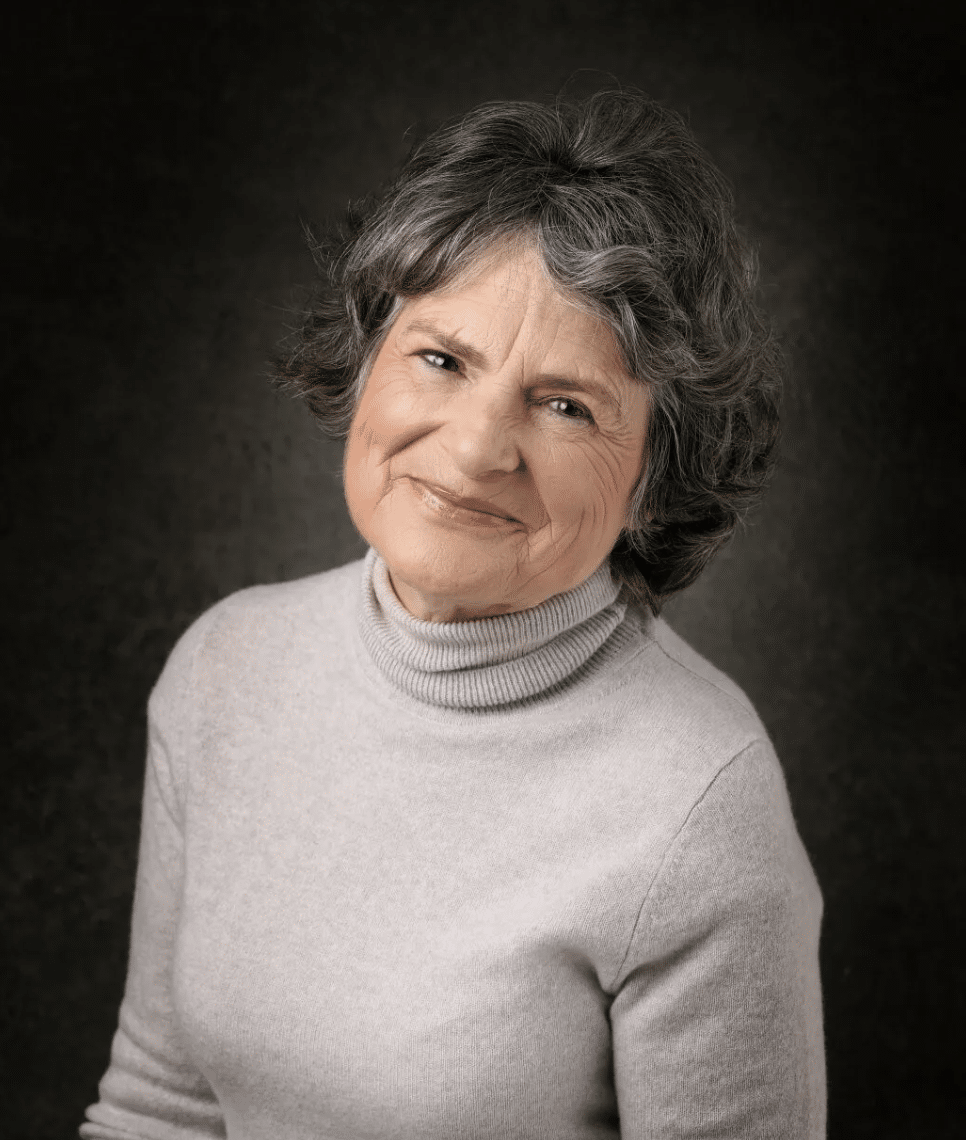
JC – Welcome Fiona to our Meet Our Authors series. It’s always a good place to start by asking how you first came into contact with Bite-Sized Books?
FC – It was through our mutual friend John Mair, for whom I know you’ve published many books. John arrived at the BBC as an assistant producer in the 1980s when I was a senior producer. He’s an avid networker and kept in touch with me over the years.
JC – You were born in Leicester, in the English Midlands, in the 1950s, but now live in Cambridge. What took you there?
FC – Yes, I grew up in Leicester, living next to the railway line and the Working Men’s Club, where my dad was the manager. I was a bookish child and went to grammar school where I flourished. I won a scholarship to Oxford University and then when I started at the BBC in 1975, I moved to London and lived there for nearly twenty years. I married another TV journalist and we had two children, so like a lot of families, we decided to move out of the city to a village in Cambridgeshire. After my children left home, and my husband died, I decided I needed a city again and that’s how I ended up in Cambridge.
JC – Tell us more.
FC – So just a few years before I arrived in Cambridge, I got a letter from Vancouver telling me I’d come into some money, an inheritance from a Canadian man I had never heard of. Yes really. It wasn’t a scam. The official who wrote to me explained how this man had died, all of seventeen years previously, in the care of the State, intestate and apparently with no family.
The Canadian officials put heir hunters in the U.K on the case. They eventually discovered that the man’s mother, a woman called Jessie Heading had emigrated from England to British Columbia in 1912 and had created a new identity for herself out there. She’d changed her name to Mrs McDonald and knocked a few years off her age. It turned out that she was the illegitimate child of my mother’s great-aunt, a farmer’s daughter. She was informally adopted by a widowed housekeeper in Cambridge, destined for a life of domestic service.
When I got to Cambridge, I decided to research her story on both sides of the Atlantic. I was particularly interested in her story as I too was born out of wedlock. I didn’t find that out until I was in my forties but it explained a lot about my mum and dad’s lives.
I wrote a book about my own childhood experiences alongside the story of my distant cousin Jessie. Secrets Never To be Told was published by the Conrad Press in 2021.
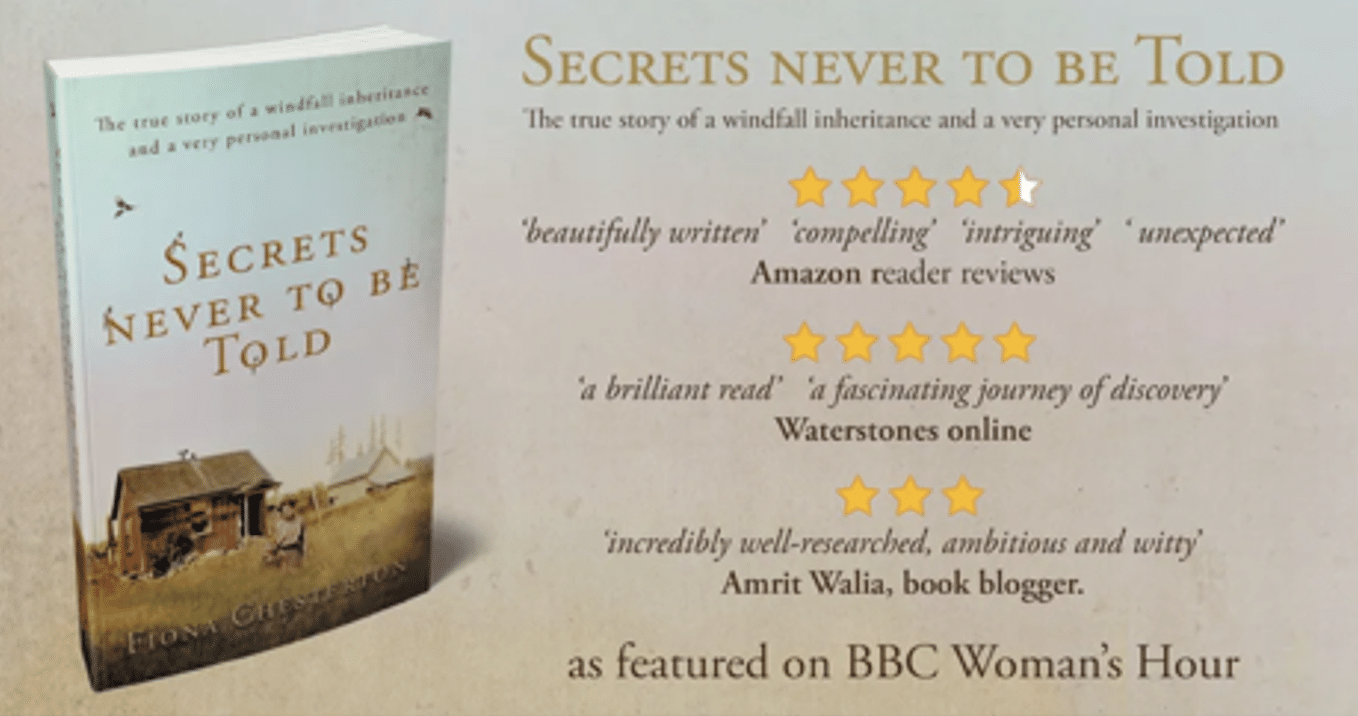
Secrets Never To Be Told – Amazon https://tinyurl.com/3cms7htn
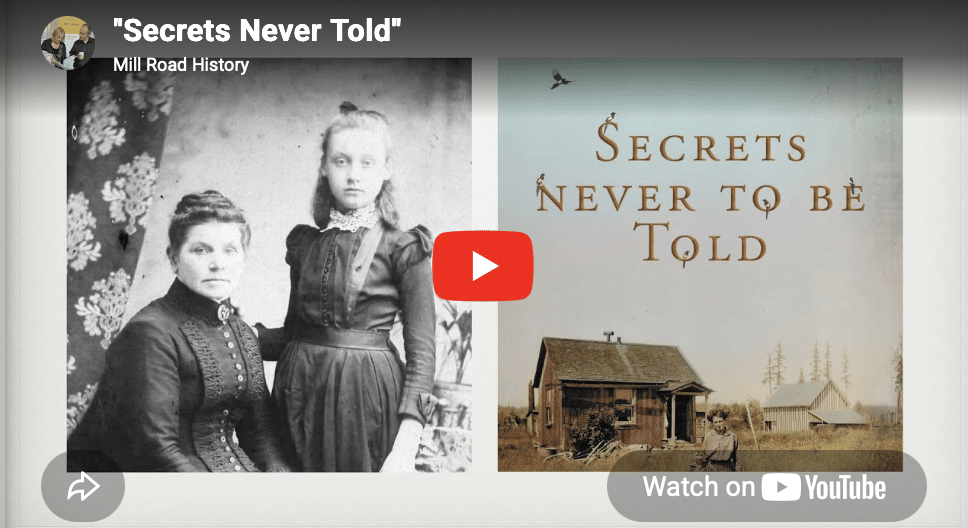
See Fiona’s YouTube video about the book- https://www.youtube.com/watch?v=la4IupyBbpA
JC – It sounds like a book that lends itself perfectly to film adaption. Have your thought about progressing that?
FC – Well, I would love to see my book turned into a film or TV drama. It’s a cracking yarn for a start – although quite a complex narrative. There is a thriving film industry based in Vancouver, I understand, but the book itself hasn’t been published in Canada.
The strange thing is – as I discovered when I was in British Columbia- there are very few stories, if any, told about any of the thousands of single women who emigrated to Canada before the First World War to make a life for themselves. We know a lot more about the men who went out to the West Coast of America in Victorian times – not just the cowboys but the gold miners as well as the explorers and settlers.
How did a young woman like Jessie get the courage to take herself on a steamship – just six months after the Titanic sank- across the ocean and then across the continent by train, with just £25 in her pocket and a small suitcase with a few mementoes from home in it? (I ended up with those mementoes – photographs, a few cards, and a couple of letters). She survived against the odds, living in a small cabin with a smallholding for nearly half a century.
I haven’t yet made any real effort to sell the film rights and my first publisher didn’t either. Still, if there’s anyone reading this who might be interested, do get in touch.
JC – You moved into Journalism?
FC – Yes, after I graduated, I decided to try for a job in journalism. I was rejected by my local paper for a junior reporter role – on the grounds the editor was looking for a boy to do the job. I had no journalistic experience but still decided to have a go for the BBC’s News Trainee scheme.
JC – How difficult was it to secure the trainee position and tell us why it was significant?
FC – Even then, it was very competitive but somehow I got through and was one of eight chosen. I was the only woman. It turned out that I would be the last ‘token’ woman on the course as later that year, 1975, the Sex Discrimination Act was passed into law. There were two women on the following course out of six- and within a few years, it was half and half.
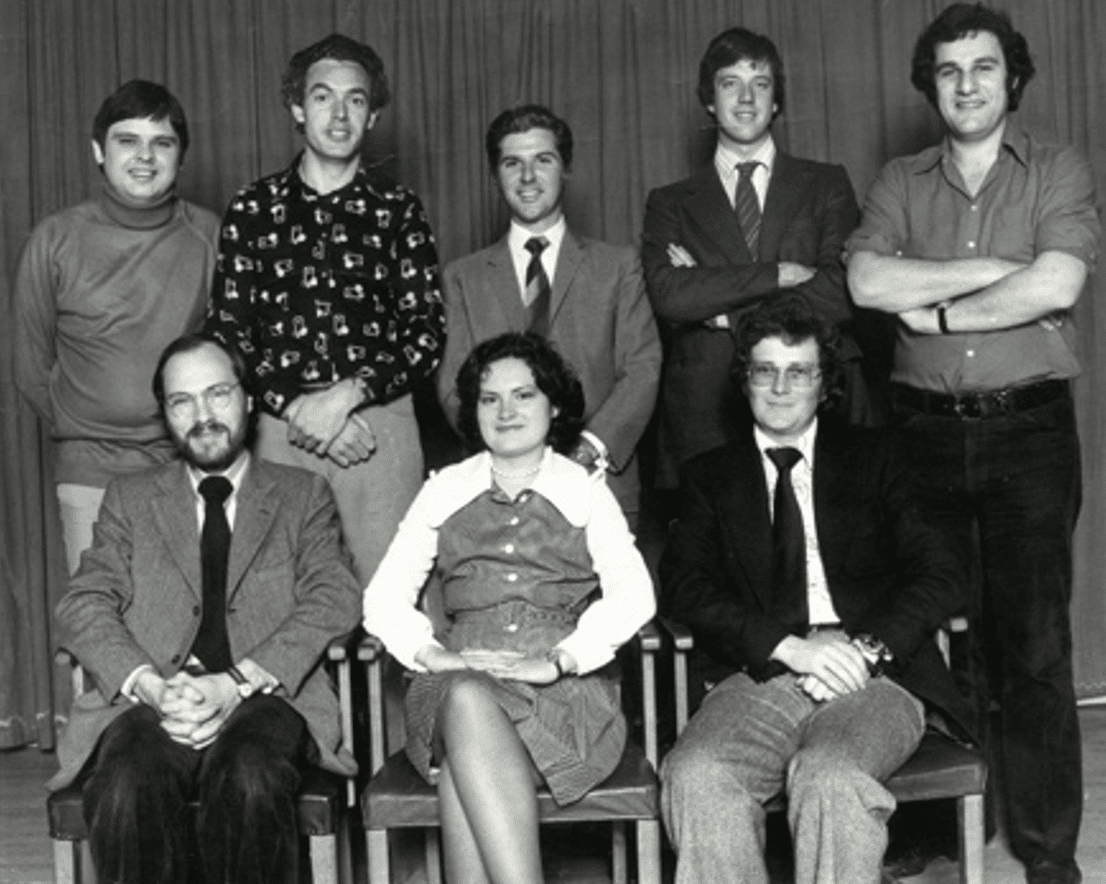
Me on the BBC News Trainee Scheme
I was told at the time, one of the reasons I succeeded was that I was actually a regular TV watcher – unlike other candidates who were rather snooty about TV and merrily told the BBC that they were too busy to watch. I also think that having had elocution lessons as a child to deal with a speech defect – which removed my Midlands accent- helped. I wrote well, had a lively interest in politics and current affairs – and having a degree from Oxford University certainly helped too.
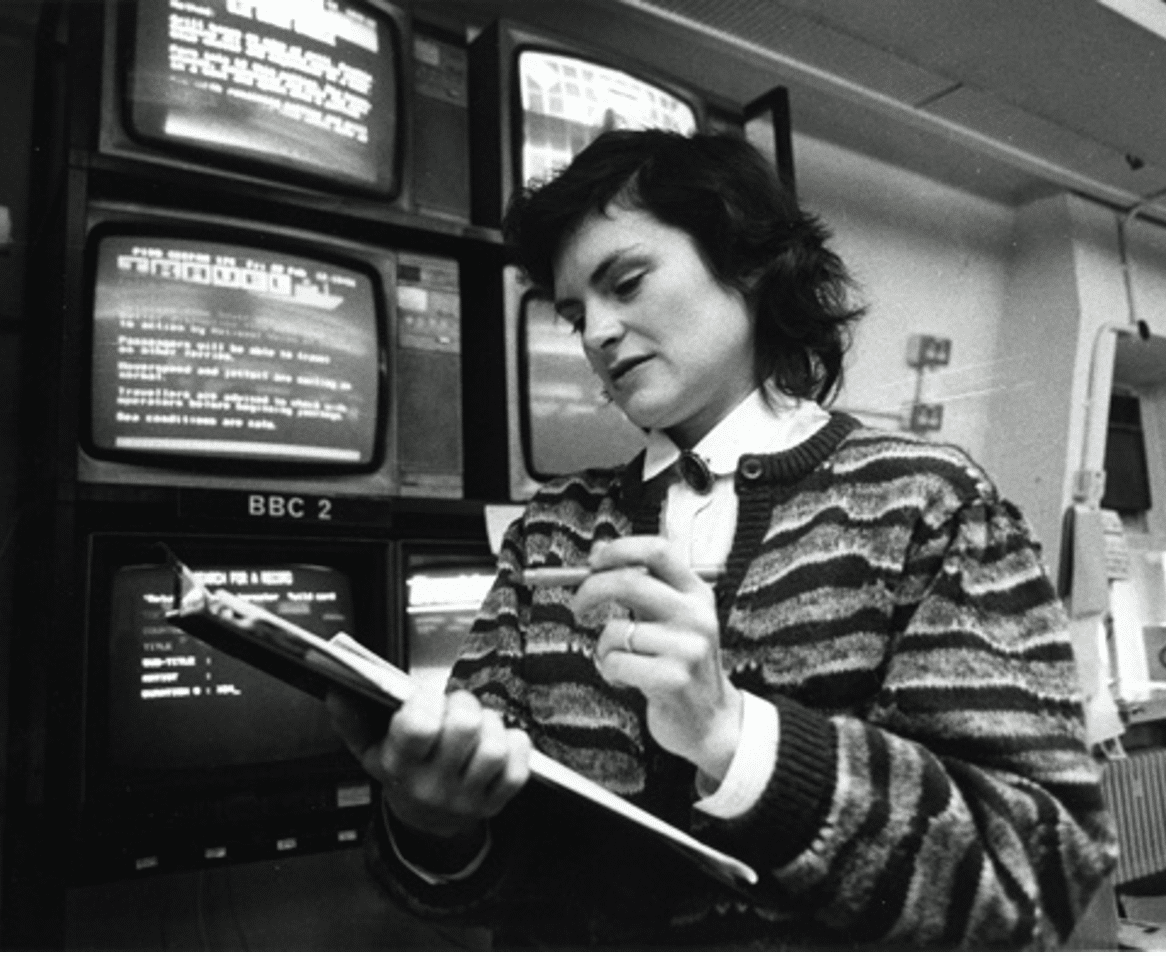
Fiona at Lime Grove Studios, production office, 1985
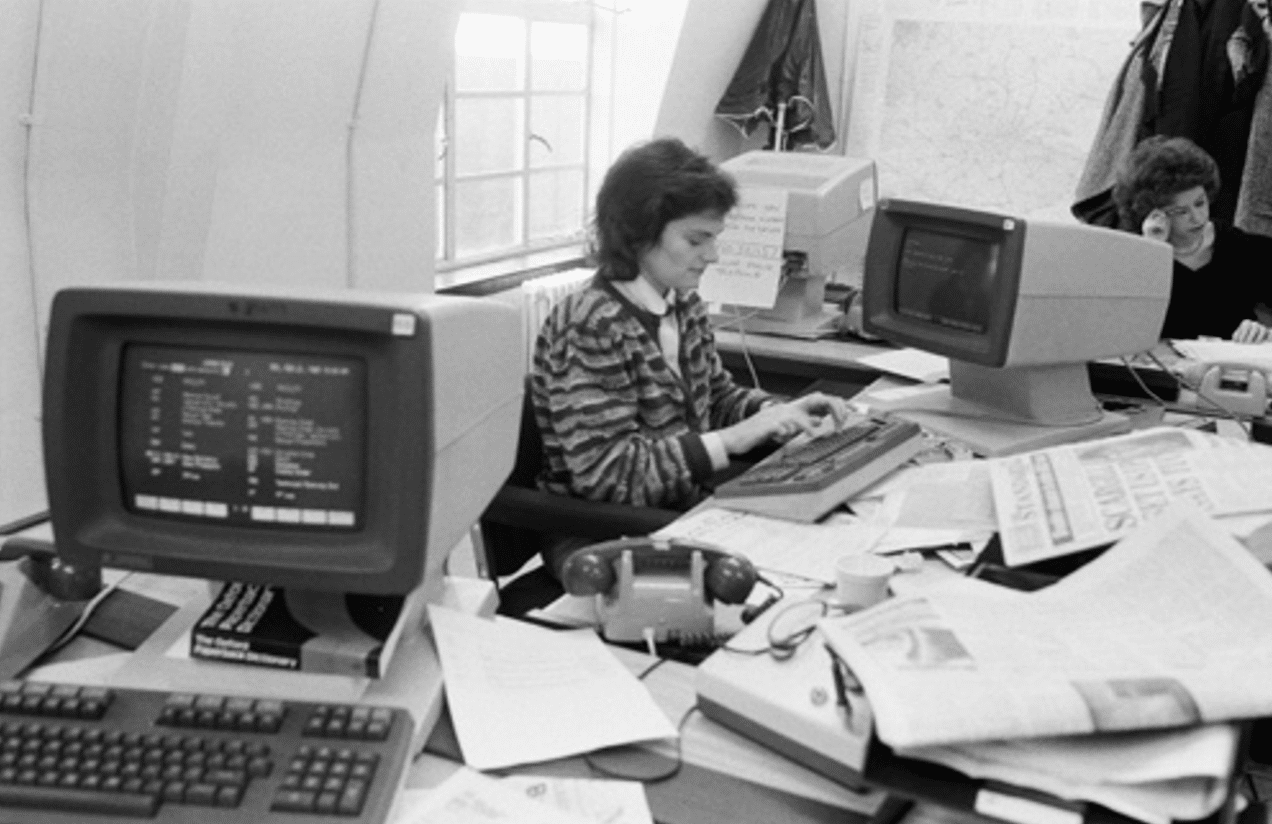
Fiona at her editorial desk, Lime Grove, 1985
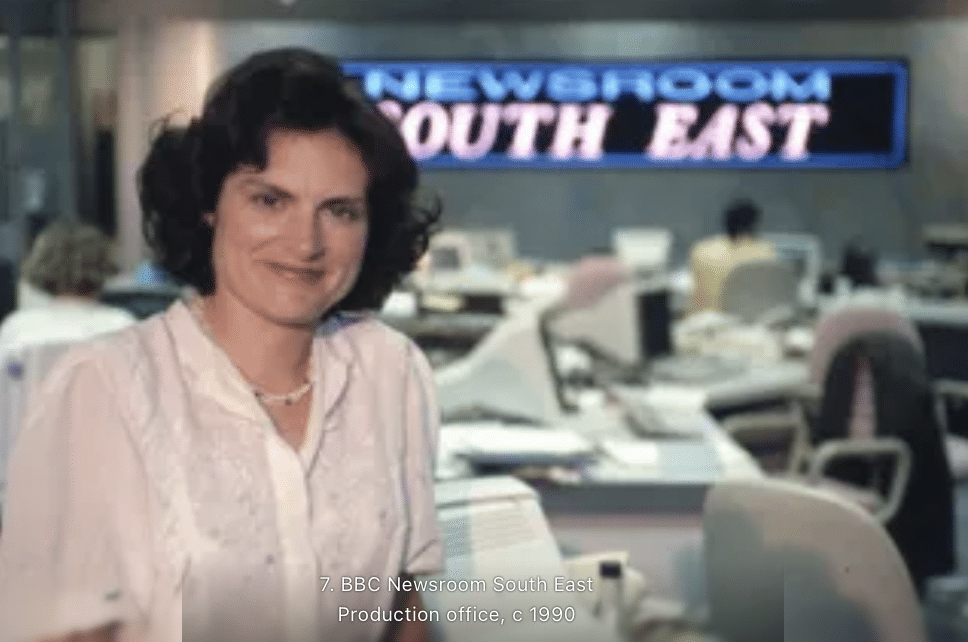
BBC South East
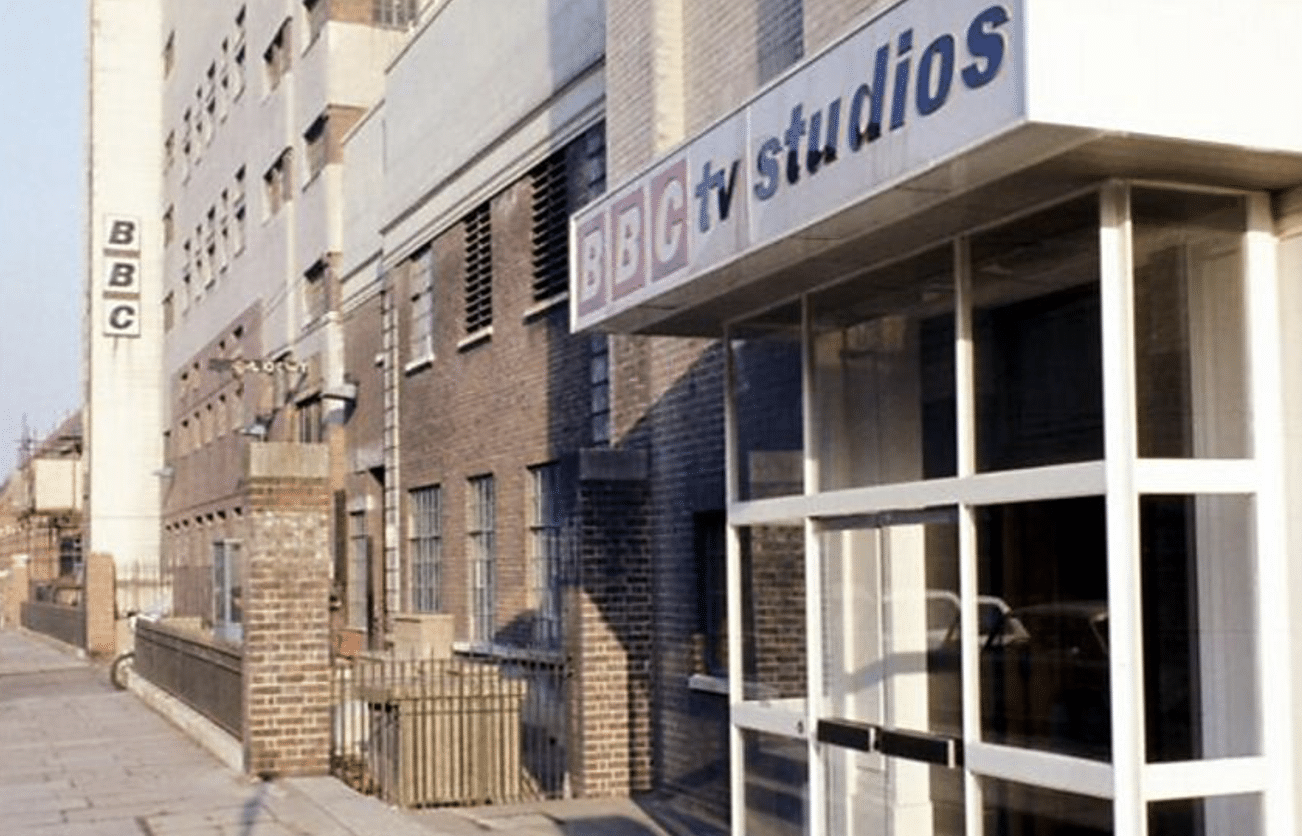
Lime Grove Studios
It was a great opportunity which few – apart from trainees like us – were able to have. It gave us a springboard into competing for proper jobs after a year or two. We were paid of course – and got expenses as well.
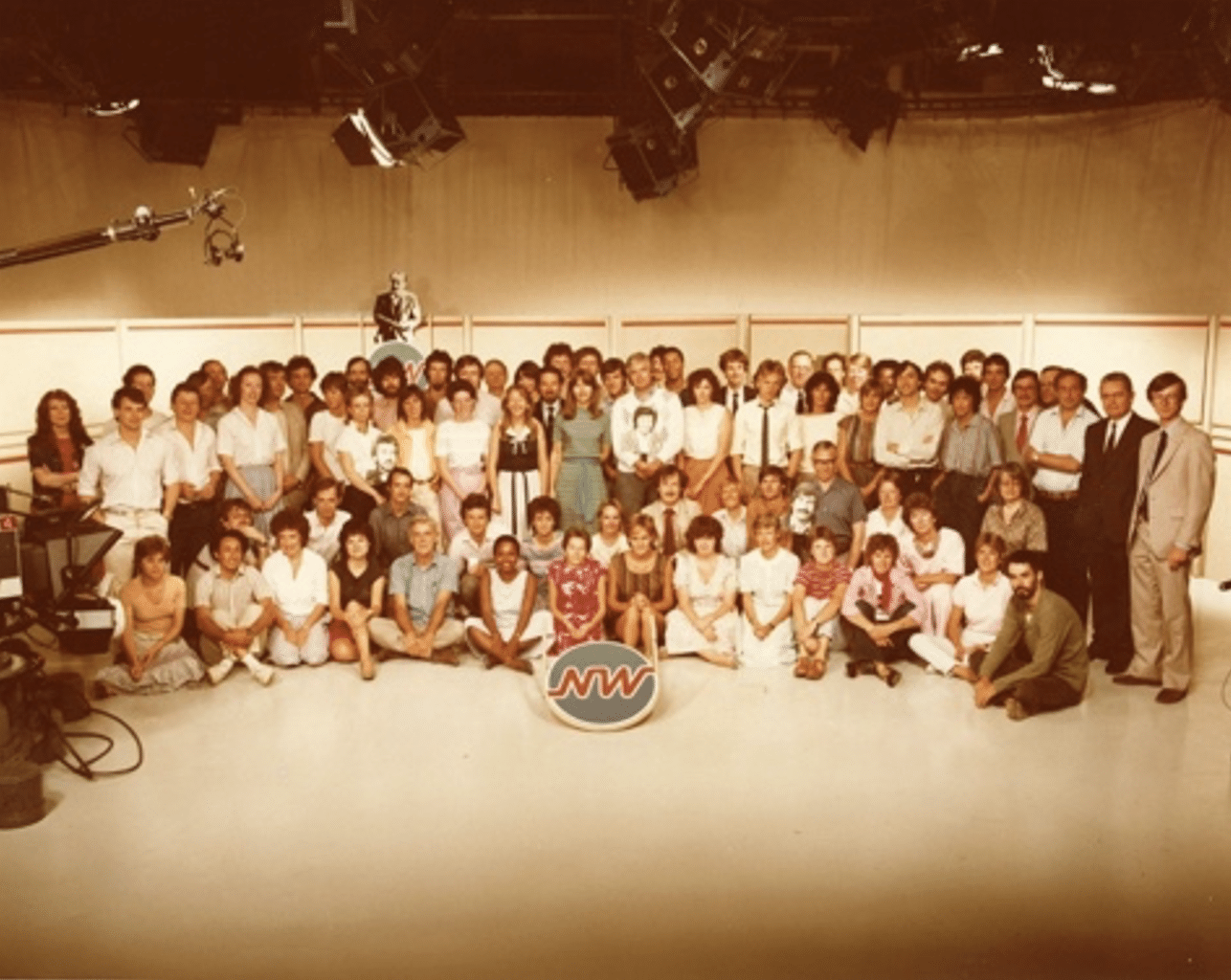
Nationwide team photo, Studio E Lime Grove August 1983,
Fiona is 4th from left, front row
JC – So things were starting to go well. But was there still a constant struggle to change attitudes?
FC – I was never a radical feminist – I had simply grown up in a school environment where girls were expected to get a job, make their own way in the world and to aim high. At Oxford in the 70s, the young men vastly outnumbered the women so I was expecting some disparity in the workplace as well. The women at Oxford knew they had had to work a lot harder than the men to get in- and so I took that attitude into the BBC as well.
As a trainee, I thought I would be treated equally to the men, but as soon as you got out into a working newsroom, it was clear that it wasn’t like that. There were deemed to be a lot of jobs that women couldn’t do, like reporting, foreign correspondents, camera operation, film editing etc.
The news editors and the managers were nearly all men as well. As I describe in my book, there were all kinds of what we would now call everyday sexism as well to contend with – and a lot of what would now be considered totally unacceptable – if generally mild- sexual harassment.
Few women complained. We just learnt to handle it – and get on with proving we could do the work.
JC – Did you have a mentor at the BBC? If so, in what way did they help?
FC – I wouldn’t say I ever had a mentor as such. However, there were certainly several men who were in editorial managerial positions who encouraged me and gave me opportunities. I wouldn’t want to single out one. The older generation of men were giving way to a younger, more progressive one. In my case, I found a more open culture for women in the current affairs department (at the time based in Lime Grove Studios) than in the newsrooms.
I also point out in the book that it was easier to progress as a single woman than when a woman got married and particularly when she had children. I was one of the first women to negotiate to go back to work part-time after having a baby in 1985. I was a Senior Producer by that time, and I realise that it was harder for more junior women to get flexible working. It was also much harder to get further promotion after you’d had children at that time.
JC – Another first for you – and very fortunate?
FC – For sure, I was very fortunate to be in a role that I really loved. Although much of the work involved very serious issues, there were plenty of laughs to be had, especially on a programme like Nationwide which I worked on for five years.
Back in the 70s, live TV programmes- like Nationwide- were much less predictable. Anything that could go wrong regularly did. We also took more risks and enjoyed bringing some light relief to the serious business of news. There was Richard Stilgoe at the piano one evening, presenting Watchdog (at first a part of Nationwide) the next.
I tell the story of one of the many ‘regional round-ups’ that went wrong – when we attempted to find the fastest turkey plucker in the UK. Feathers flew in more sense than one!
The team that made up the Nationwide presenter line-up had to cope with anything – and usually did with great aplomb. Sue Lawley, Frank Bough, Hugh Scully, Sue Cook, Bob Wellings – as well as Val Singleton- they could all stay smiling.
JC – Who were the most memorable people you worked with?
FC – There are so many – mostly those who worked off-screen and who weren’t in any way famous. They wore their skills and experience lightly and despite the inevitable pressures of live TV managed to stay nice people as well.
As to those on-screen, at first, I was rather in awe of those who I had seen as a TV viewer back home before I joined the BBC. There were the newsreaders, like Kenneth Kendall and Angela Rippon. I remember encountering Melvyn Bragg, a very glamorous figure then, in the lift at Lime Grove. Joan Bakewell and Esther Rantzen both worked there, though I was never on the same programme.
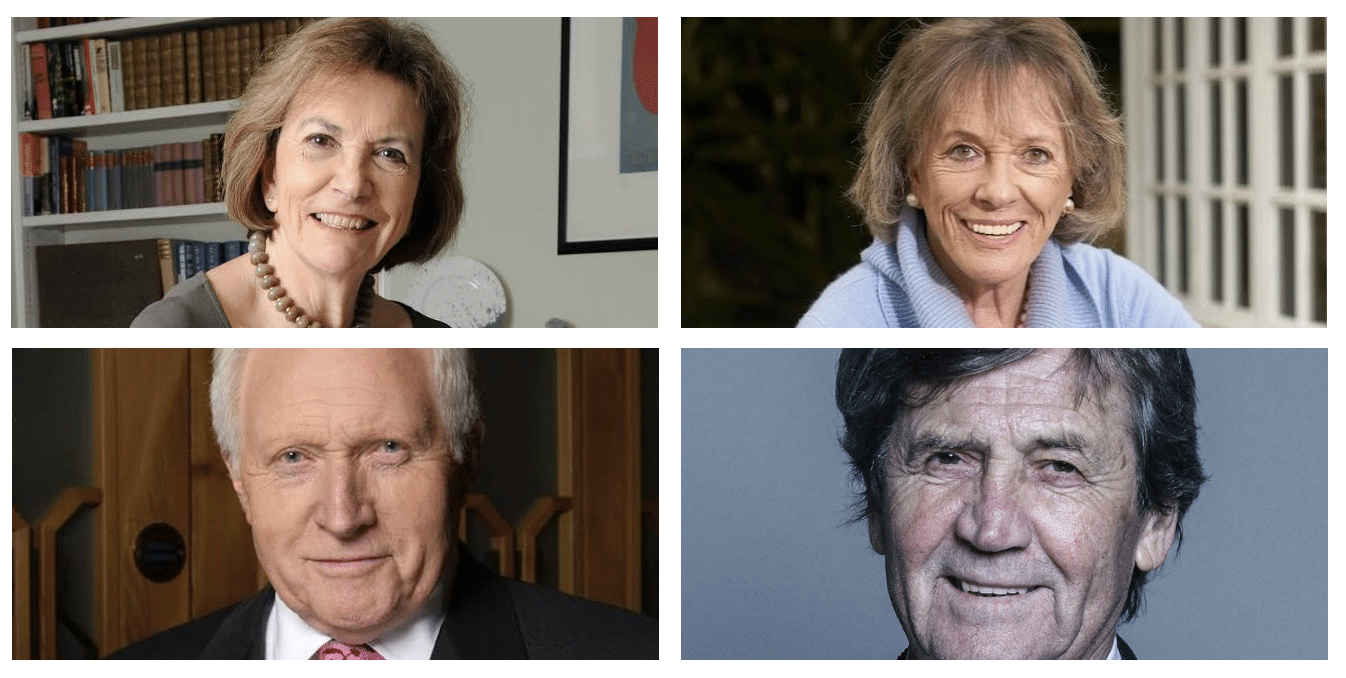
Clockwise – Bakewell, Rantzen, Bragg, Dimbleby
When I worked on General Elections, from 1979 onwards, I came across David Dimbleby for the first time. He made everything look so easy – with this most complex of live operations involving hundreds of people beavering away through the night- behind him.
There were many brilliant women who I worked with, or who, more latterly worked for me, who have gone on to do great things in TV and elsewhere.
Jana Bennett, the first Director of TV at the BBC; Morwen Williams, head of the giant News Ops department and Alison Holt, a distinguished and long-serving Social Services Correspondent at TV News and Panorama, both of whom I appointed to their first jobs; Sara Ramsden, one of the most brilliant creative director and producers who you might not have heard of, but has had enormous influence over the past forty years in TV especially with science programmes.
JC – All sounds so rewarding to have helped so many others in their careers. It couldn’t have been entirely ‘plain sailing’ though?
FC – Yes, of course. In the early days, especially, I encountered some harassment and bullying. When I went to Radio Sheffield, I was given a very strange initiation test by the News Editor, not just because I was a woman but because I was seen as a posh Oxbridge type that needed bringing down a peg or two. In TV News, I learnt the perils of trying to keep up with the lads when I was taken advantage of when drunk. In my opinion, the drinking culture which was endemic amongst journalists in the 1970s didn’t serve women well. It wasn’t just the risks of harassment, but also the networking women missed out on in the BBC Club Bar.
Although I didn’t agree with much of what John, now Lord Birt, did in News and Current Affairs, his ending of the lunchtime management drinking culture was certainly a good thing.
JC – We have to talk about the Sex Pistols. What happened with them exactly?
FC – From one sort of excess…to another. Yes, when I was a trainee in Lime Grove, I was given the job of setting up a new feature aimed at younger viewers. At the time I was the youngest researcher on the programme. This was in the autumn of 1976, and the new big thing was punk. So I booked the Sex Pistols and their manager Malcolm Mclaren. Fortunately, the plan was to record the item in the morning rather than risk a live broadcast.
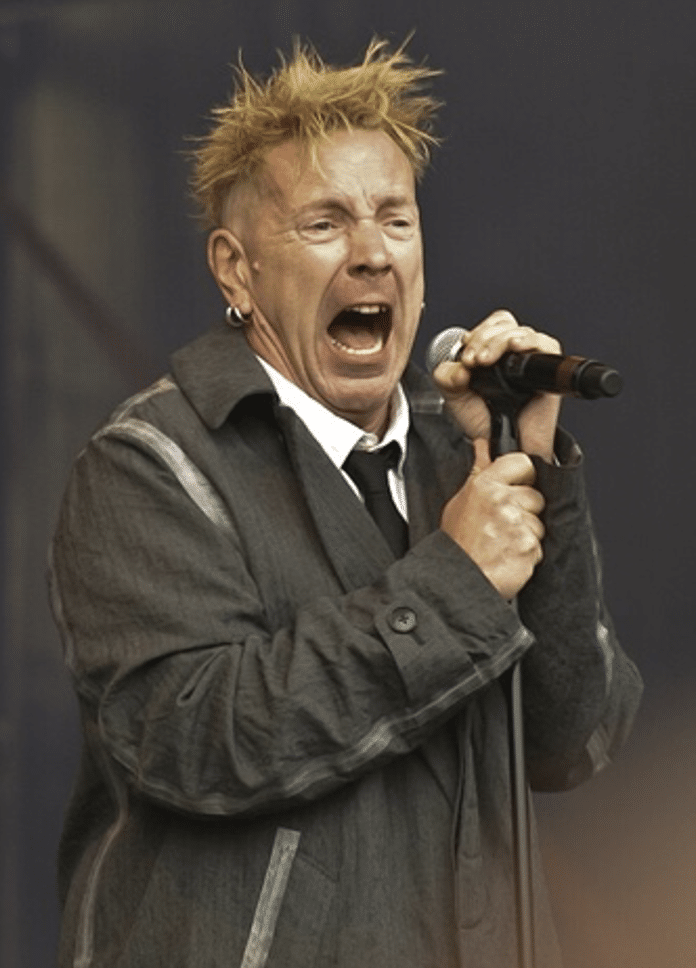
Mr Rotten
Johnny Rotten and the band arrived at Lime Grove at 10.30 in the morning looking rather pale – and with them came a gaggle of punks including someone who was soon to join the band, one Sid Vicious. I ended up taking them to the BBC canteen where some chaos ensued… I was also witness to Anarchy in the UK being belted out in Lime Grove Studio E for the first – and probably last time.
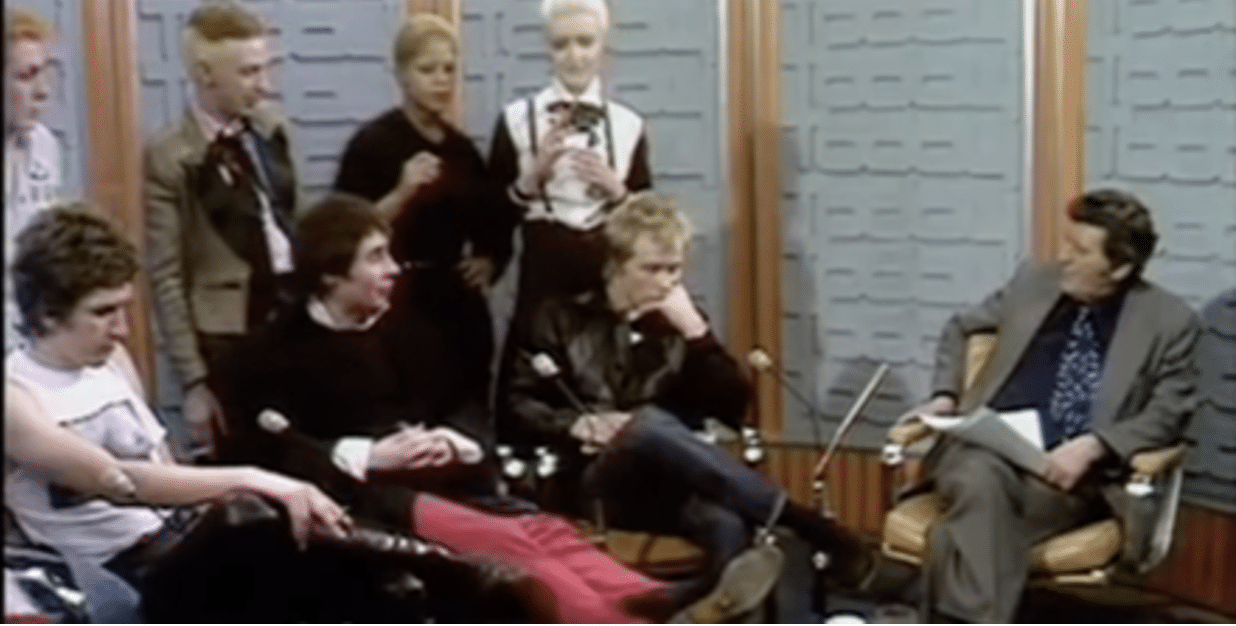
The infamous Grundy interview with the Sex Pistols live on the Today show
The following evening, our competitors, Thames News, booked the Pistols live to be interviewed by Bill Grundy. This made front page news the following day and is still regularly described as a landmark in the rise of the Sex Pistols. It still annoys me that their appearance on the BBC care of my booking somehow gets omitted from their story.
JC – and so to your book Fiona, Not The Token Woman – My BBC Life 1975-1992. It’s a fascinating book and it brings back so many memories. You can’t hear the name Valerie Singleton without it conjuring up memories of those early days of Blue Peter!
More importantly Dorothy Byrne, your former colleague who was Head of News and Current Affairs at Channel 4 Television, describes the book s both ‘shocking’ and an ‘entertaining yarn’.
Tell us how it came about?
FC – I had known Dorothy for years – she never worked at the BBC but came through Granada and Channel 4 – an exact contemporary of mine. We talked regularly about our different experiences when she came to work in Cambridge a few years ago. She read a draft of my book – and she was indeed shocked by it and agreed to write a Foreword. I was keen it should be published around the time of the fiftieth anniversary of the passing of the Sex Discrimination Act last year. This was a really important piece of legislation which helped change the prospects of women at work in every sector – not just the media. And I was also pleased Dorothy called it entertaining – as what is the point of writing a boring book?

JC – And what do you like to do in your spare time Fiona?
FC – I live a quiet life in Cambridge these days. I enjoy walking, especially in the Botanic Gardens near where I live. I also enjoy giving talks to local groups based on my books –particularly meeting the people who come to my talks who often have interesting experiences of their own to share. I also sing alto in a choir, still play tennis, and enjoy going to the theatre, to the cinema and to live music- Cambridge is a great place for culture. I also have more time for travel these days and ticking off places on my bucket list.
JC – What’s next? More writing? More public speaking?
FC – Well, I do love writing but I don’t know whether I have another book in me, but I’m thinking about it. Yes, and more public speaking too.
JC – We always like to wrap up our interviews by asking what advice you’d give to a budding journalist or television producer?
FC – Well, I’m not sure I would encourage young people to think of a career in TV, as such, but there will always be an important role for journalists and creative story-tellers whatever the platform.
My advice would be – don’t be put off, follow your dream. Work hard – and never give up. Oh and remember, it’s not about fame, it’s about the journalism. That’s what you must have a passion for.
JC – Fiona, we’re so grateful for being the latest subject of our Meet our Authors series…we wish you well with your writing, singing, public speaking and all your cultural pursuits.
More about Fiona’s book:
Not The Token Woman – My BBC Life 1975 – 1992 is available in paperback, hardback and Kindle on Amazon: https://tinyurl.com/yjxdudz6
Fifty years ago, the Sex Discrimination Act became law promoting equality of opportunity for women in the workplace. It was also the year when the author became the one woman in a group of eight trainees on the BBC’s News Training Scheme. Journalists in BBC newsrooms were overwhelmingly male in 1975. Sexism was rife.
In a very personal narrative, she tells how she survived and even thrived, especially at Current Affairs in Lime Grove Studios. She also describes the challenge of being a working mother from the mid-1980s when it was still a rarity and developing her own less macho managerial style, when she became a news editor.
Fiona’s career is set against a backdrop of the political and social turmoil of the period and the rapid technological changes which swept away the old methods of TV news production. Her own career was directly impacted by the closure of Lime Grove, after years of hostility from Mrs Thatcher’s Government and the arrival of a new management regime under John Birt.
Fiona’s contemporary, Dorothy Byrne, describes this compelling and timely book as a ‘shocker’ as well as an ‘entertaining yarn’.