
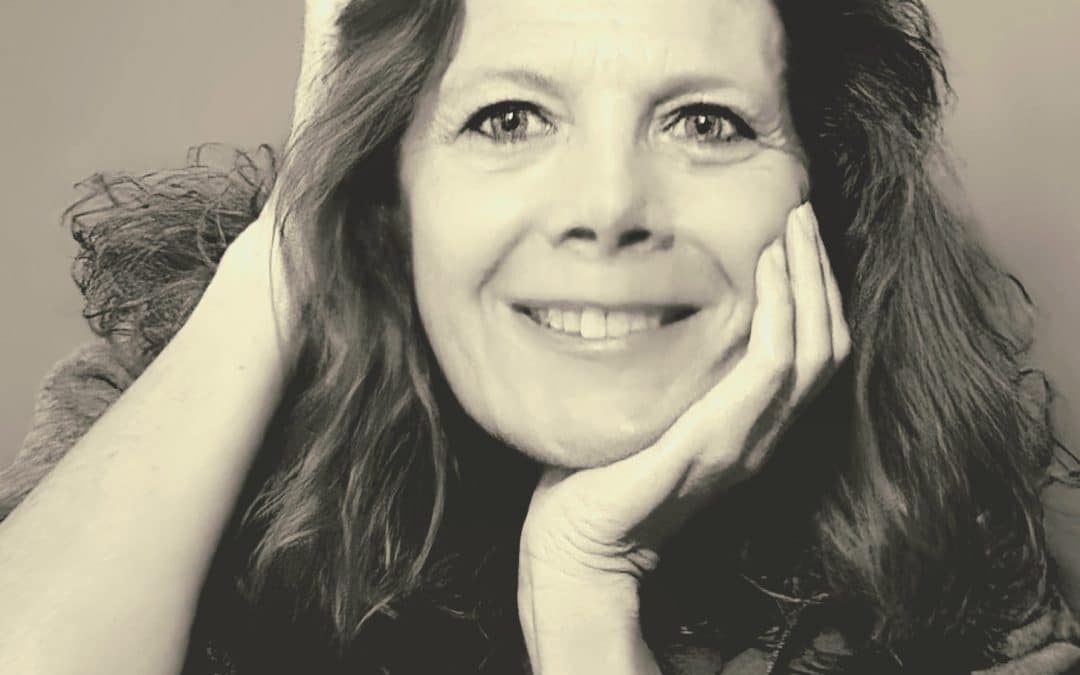
An occasional series – No.9 Rapha Elle
Julian Costley, CEO & publisher at Bite-Sized Books, interviews some of our authors to provide further background to their books and to their approach to writing. And a little ‘behind-the-scenes’ glimpse of their life and influences.
In this edition Julian talks to author Rapha Elle about her new book Anorexia – My Tough Love: Dare to Break Free and more generally about the influences and passions in her life.
JC – Rapha! Welcome to our MEET OUR AUTHORS interview series. I’m so pleased you agreed to join or growing list of authors for whom we’ve been able to learn a little more about their lives as well as their passion for writing.
RE – This is a first for me but very welcome. I’m going to give you my answers in much the same format as I’ve written the book you’ve kindly published for me.
JC – Just to orientate our readers, you’re a French national and currently live in the south of France?
RE – Yes, I’m born to French parents, and I live in the Luberon, a place close to my heart, but there are many others around the world.
JC – Your inspiring book suggests we should jump straight into your life story. Tell us about your childhood, and how anorexia came into your life?
RE – I didn’t have a dramatic childhood. No screaming lack, no visible chaos. I grew up in a socially stable environment, in a family where everything looked “just right.” But behind that surface of normality, there were deeper, quieter things. I was a little girl dressed up as a boy, like so many others before me. Being a tomboy pleased my father, it gave me a place in a world of rougher gestures. But behind that costume, there was a longing to be seen differently, through my sensitivity, my quiet way of being in the world.
So I built an inner empire, with rules, demands, and an unreachable ideal. Everything I couldn’t express, I turned into discipline. Everything I didn’t receive, I sublimated into control. And that empire, brick by brick, became my executioner. Anorexia slipped in through the silences of childhood, through the emotions left hanging. It found fertile ground in a mix of deep confusion, hunger for love, and fear of the void. The deepest wounds don’t always come from what screams, but sometimes from what stays trapped inside for far too long.
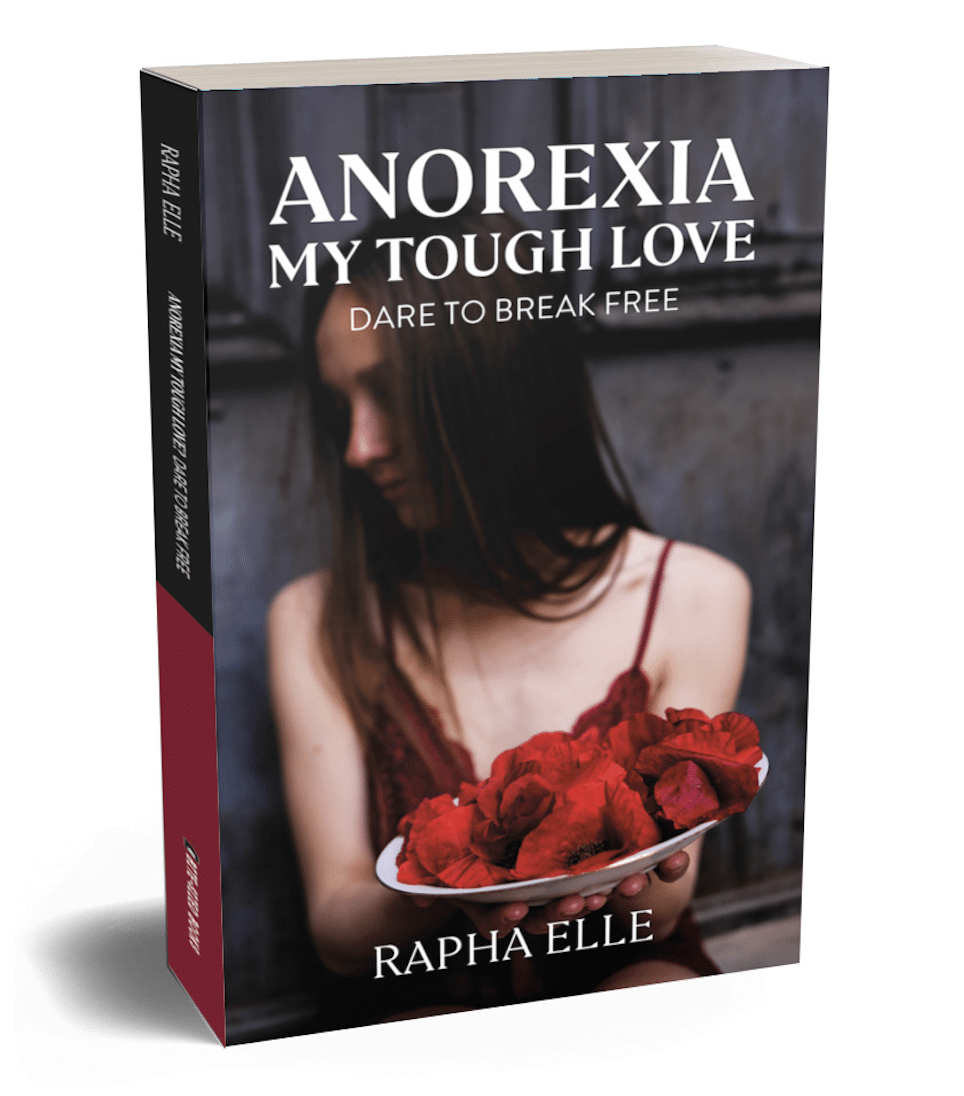
RE – I wasn’t born a writer, but I’ve always loved playing with words, breaking them apart, putting them back together differently, even inventing new ones. I write quotes on the walls of my kitchen like some people hang paintings. I read and reread passages from classic and contemporary writers (Marcel Proust, Sorj Chalandon, Virginia Woolf, Leonora Miano…) whose words move me deeply with their elegance and truth.
JC – When and how did the idea of writing a book about anorexia come to you? I understand it’s quite a time now since your illness. So it wasn’t an immediate motivation?
RE – Anorexia drowned me in denial. I clung to a thousand excuses like shields. In that blurry, contradictory chaos, I carried words with me, pressed close to my heart — like a talisman hidden in my pocket. It took time, distance, and silence to look back at that part of my life without anger or shame — with the maturity that sometimes comes to those who have fallen and chosen to rise again, differently. I didn’t write this book from inside the wound, but from the after, when I could look at my past without burning in it. I didn’t want to write yet another book about anorexia, filled with stats and symptoms displayed like open wounds. I wanted to speak of what’s often left between the lines:
the contradictions, the mechanism of denial, the silence.
The things you can only begin to understand once you’ve slowly made your way out of the tunnel. I wrote this book for those who feel they don’t deserve to heal. For those walking through the abyss. Also for the ones beside them, caregivers, loved ones, the curious. I wrote it to offer a different voice, neither tearful nor clinical. It’s not a raw testimony or a how-to survival guide. It’s a book that doesn’t try to explain, but to make you feel.
I wrote it to help, but also to pass something on. And maybe, I hope, to sow a little hope.
The healing methods I share are unusual and deeply personal. They’re what helped me rise and bring color back into my life. This is not a book about calories or diets. It’s about learning to taste life again through the senses, through the wisdom of the body.
JC – Let’s go back a little Rapha. What’s your professional background?
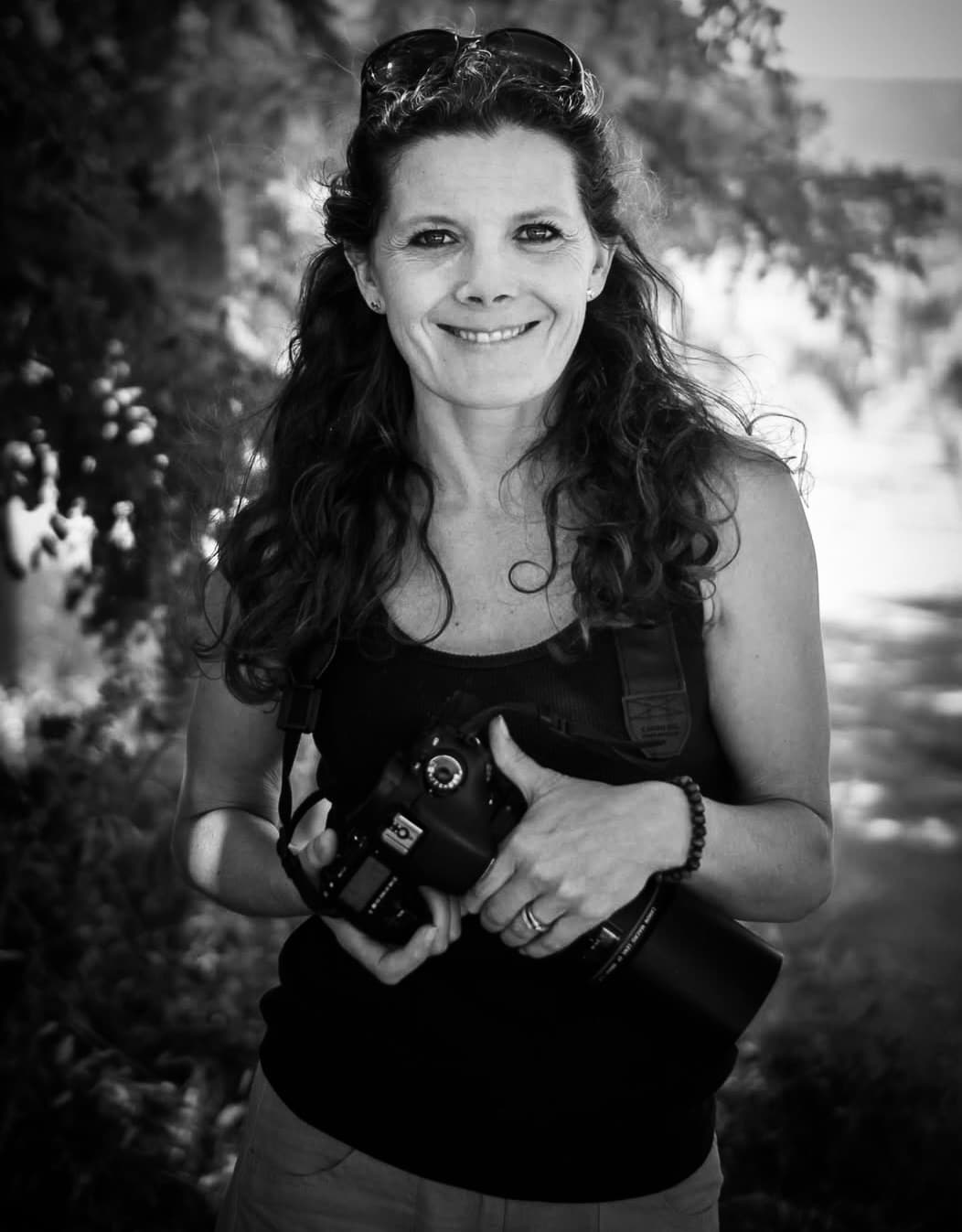
RE – My path hasn’t been linear — it’s woven with words, images, stories, spaces to bring to life. I spent years as a cultural programmer in Gordes, where I worked to make art and people connect — through festivals, exhibitions, collective projects. What moved me most was always this: transmission, resonance, making invisible things visible. Then photography came into my life. My gaze shifted. During wedding photo shoots, I was immediately drawn to the art of portraiture. There’s something haunting about a look, a gaze, caught on camera. Not just because it’s sharp or well-lit. No. Because sometimes, behind the eyes, something happens — a silent vibration that reveals far more than the visible. In that instant, I don’t just see eyes. I see through them. And what I glimpse behind is presence. A story. Depth.
They say the eyes are the window to the soul. It sounds like a cliché — but when you look at certain portraits, you understand why that phrase has lasted through the ages. The gaze isn’t just a detail — it’s a world. When I photograph someone, there comes a moment when the mask falls. When the body stops pretending, and the face stops posing. And then, something real appears. A quiet force. Everything is said without a single word. Because in that gaze, I see a fragment of soul. A flicker of night, or a flash of light. Something deeply human. Fragile. Alive. That’s what I wait for, that honest moment that moves me. And in that presence, I recognize something of myself. In parallel with photography, I also worked in a library, returning to the heart of words. Books have always been my refuge, a place where I find peace. Books offer a rare kind of grounding. They bring us back to the present, not through force, but by quiet invitation. Their rhythm is slow, human, respectful of breath. Reading is a form of active meditation — a suspended time where the mind reaches beyond itself. Sometimes a single word is enough. A line underlined. A paragraph reread. A book can be a discreet compass in the storm. And maybe, my book will become that for someone. A space where one feels less alone, less trapped.
JC – You’ve a strong skill and empathy with not just writing but with photography. How did completing the book influence your photographic work?
RE – For me, photography and writing share a similar quest: capturing essence and emotion. In a portrait, I do not content myself with what I see; I seek to reveal fragility, strength, silence, and suggestion. I do the same with words, attempting to bring depth to the surface.
There is also the relationship with time. In photography, I capture a precise, sometimes fleeting moment when the subject reveals their truth, while in writing, I freeze moments and dialogues.
In both arts, the visible and the ephemeral meet.
In both, the sensation is the same: capturing a truth and letting it resonate in those who see or read. Photography or writing is the same adventure: a way to make the soul vibrate and to reveal, with sensitivity, the hidden mysteries and secret beauty of the world.
RE – As far back as I can remember, I’ve lived between two languages: words and body. Words first, because they can do anything. They name, connect, elevate… or destroy. They are both spell and fracture. Then the body. A whole world in itself, one we often forget to greet when all is well. A living, sensitive, sometimes rebellious terrain. I haven’t always understood it. I haven’t always loved it. For a long time, I fled from it. It belongs to me, and yet, it escapes me — like a work in constant evolution. The body is a silent language, a mute archive. It stores everything: wounds, joys, fears, desires. I truly believe the body knows before we do. It says everything, the cracks, the memories, the unsaid pain. It holds an ancient wisdom, long overlooked in a world that worships mind over matter and appearance over essence. I’m seeking my way somewhere between language and flesh. That’s where understanding begins.
JC – You’ve successfully written a book that is both analytical and functional in its detailing of the struggle, but also your writing is at the same time poetic. Is this why your book is so different from other books about anorexia?
RE – I wrote it like a breath after drowning. Not to convince, but to say things differently.
To say what too often stays unspoken. My writing doesn’t cure. It doesn’t heal. But sometimes… it touches. And maybe, in that moment, there’s a first spark. I write for those whose mouths stay closed while their eyes scream. Because I deeply believe you can speak of darkness without sinking into it. This book offers a different gaze, not dramatic, but deep. It invites a shift in understanding. It speaks to the heart, not the statistics. If this book brings hope, it’s because it doesn’t lie. It promises nothing. But it opens a door.
JC – how did living abroad help you heal from anorexia?
RE – Living abroad wasn’t just a change of scenery — it was a needed distance, a kind of breathing space. A way to take a step back, to loosen the invisible grip of the illness. Far from familiar expectations, from roles and watched gazes, something in me began to shift. I saw other bodies. Other ways of living, moving, inhabiting oneself. In some cultures, the body is celebrated. In others, it’s quiet, symbolic but never reduced to what I had made of mine: a battlefield. I realized that what I had believed was not universal. That my obsessions, my rules, were not absolute truths, but conditioned fears. That elsewhere, life could be lived differently. That truth, that relativity, set me free. By discovering other ways of being, I began to question mine. And little by little, I broke my own inner laws. Leaving helped me see. And maybe that’s the first step in any healing: to open the gaze. Paradoxically, you sometimes have to step away to come back to yourself. Distance isn’t escape. Sometimes, healing begins with a departure — not to run from yourself, but to finally come.
JC – I do hope those reading this interview will buy your book. But if I asked you give a message to someone who’s struggling with anorexia, what would it be?
RE – You are not your disorder. You are not your weight. You are not a number. You are a whole person, complex, worthy, alive, even if sometimes you feel yourself fading. Anorexia isn’t a whim or a lack of willpower. It’s a deep pain that found refuge in control, in silence, in the body. You have the right to struggle. You even have the right not to want to heal just yet. But please hear this: You are not alone. And this is not your destiny. There is a quiet strength in you, even if you don’t see it yet. The strength that kept you going. The one that made you search for words, for meaning, for something different. That strength can be nurtured. Transformed. You don’t have to be healed to deserve love. You don’t have to prove anything to deserve your place here. You are already enough. And one day, maybe sooner than you think, your body will stop being a battlefield. It will become a home. You will no longer need to disappear to be seen. You’ll take your place, not for others, but because deep down, you’ll know: you have the right to be here. Fully. Freely. Alive.
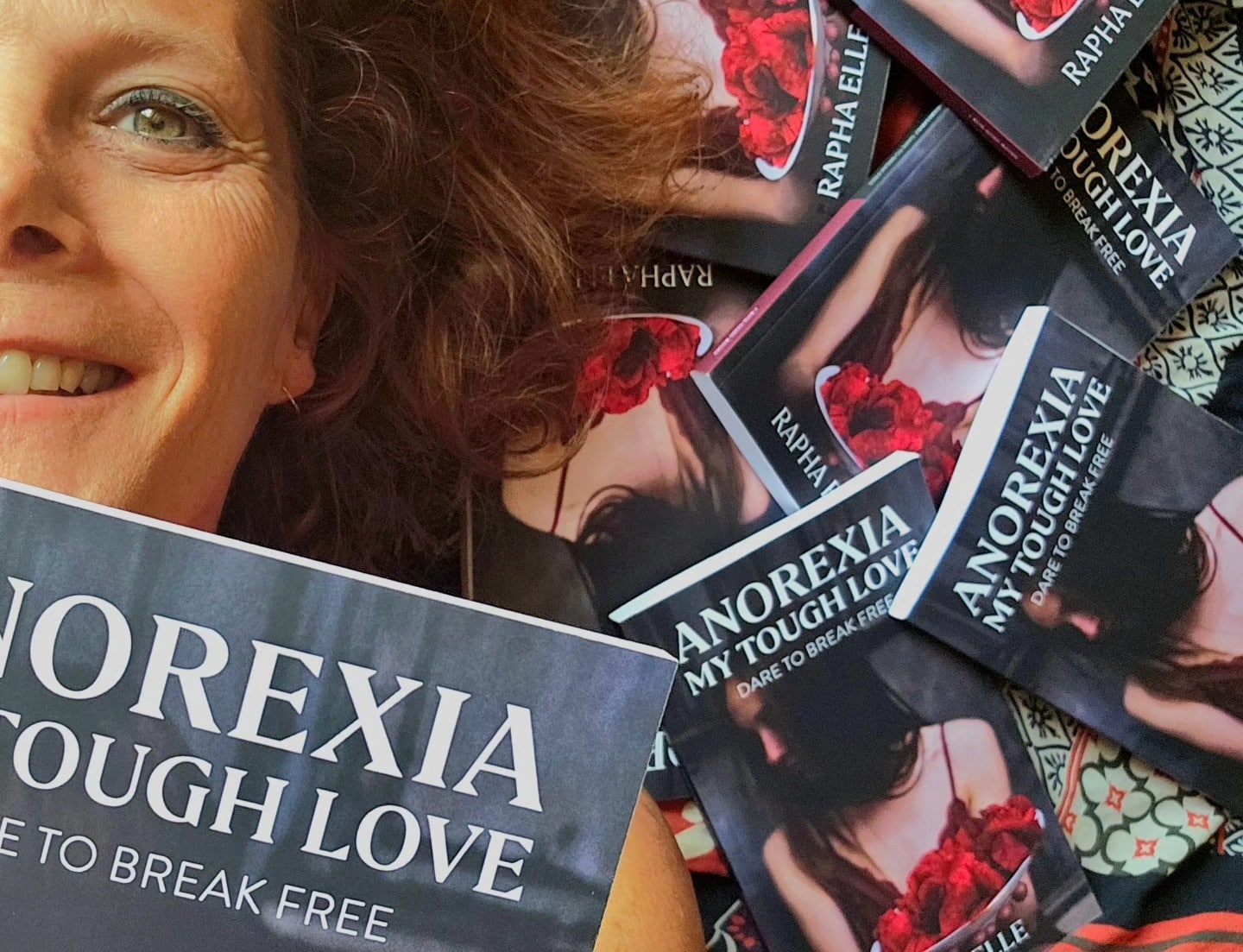
RE – By nature, I am curious, easily drawn to the unusual, the illogical, the unexpected. My thoughts often scatter and never stay still. Writing was never an obvious path. I never dreamed of making it a project. The desire to write was born from the need to share, to give voice to my testimony of anorexia, as a trace, a way to make peace with a thorn-filled journey. The way I write resembles the way I live: without a straight line. My style is uneven, sometimes abrupt, raw, or carried by poetic surges. It bears my flaws as much as my flashes of insight. It built itself over time, gradually, refined and polished through each chapter, then reworked and burnished again. I sought to give form to what lived inside me, to shed light on raw emotions, the ones we don’t always know how to name but that pulse beneath the skin. And it took me time, because I love the balance that emerges between words, their resonance, and the rhythm they create. Writing was, for me, a challenge, a new mountain to climb, and perhaps I embraced it because I’ve always loved this kind of challenges.
JC – Your influences Rapha? Tell me about some works of fiction that have inspired you to take up writing?
RE – Among contemporary authors, the ones who inspired me the most are Amélie Nothomb and Christian Bobin. Both, in their own way, are artisans of sensitivity.
In Amélie Nothomb, I admire that disarming lightness with which she approaches human complexity, her way of turning the strangeness of everyday life into a theatre of sensations and ideas. Her writing, both sharp and delicate, fascinates me with its boldness and its ability to reveal beauty within the bizarre. I loved Soif, one of her brilliant work, daring in the rarest way.
To give Christ a voice, to make him speak in the first person, is almost a sacrilegious literary gamble, and yet profoundly human. In this book, Amélie Nothomb does not aim to shock, but to offer an intimate, vibrant voice, full of doubts and light. She explores suffering, love, and mortality with such intensity. This inner perspective on the divine, intertwined with human fragility, moved me deeply.
With Christian Bobin, everything feels softer, more silent. His writing is filled with light and tenderness, as if each word were placed gently on the page to soothe what it touches. There is with him a poetic humility, a way of writing life in its barest simplicity.
I was profoundly touched by La Plus que vive. It is a text of poignant tenderness, written like a prayer for the woman he loved and lost. Bobin speaks of death with an almost luminous gentleness, transforming pain into presence, absence into gratitude.
These two works, so different yet so close in their quest for meaning.
They remind me that literature can be a space of sincerity, a place where one dares to approach the invisible, faith, loss, and the fragility of life.
JC – We always ask what advice you’d give to an aspiring writer, or photographer. Whether they are writing, as you have, to tell an inspiring life story, or simply, perhaps a novel?
RE – First and foremost, I would say: be honest. With yourself, with your perspective, with your voice. Technique can be learned, style can be refined, but sincerity cannot be manufactured. It is true stories, even imperfect ones, that resonate over time. Try to understand what moves you, what obsesses you. That is where your voice lives. The world doesn’t need more noise; it needs honest voices. Write or photograph as you breathe, out of necessity. If a story won’t leave you alone, then it deserves to be told. And if it frightens you, it’s often because it’s the right one.
JC – We really appreciate you giving your time for this interview. Bon chance with all your many projects and paths.